
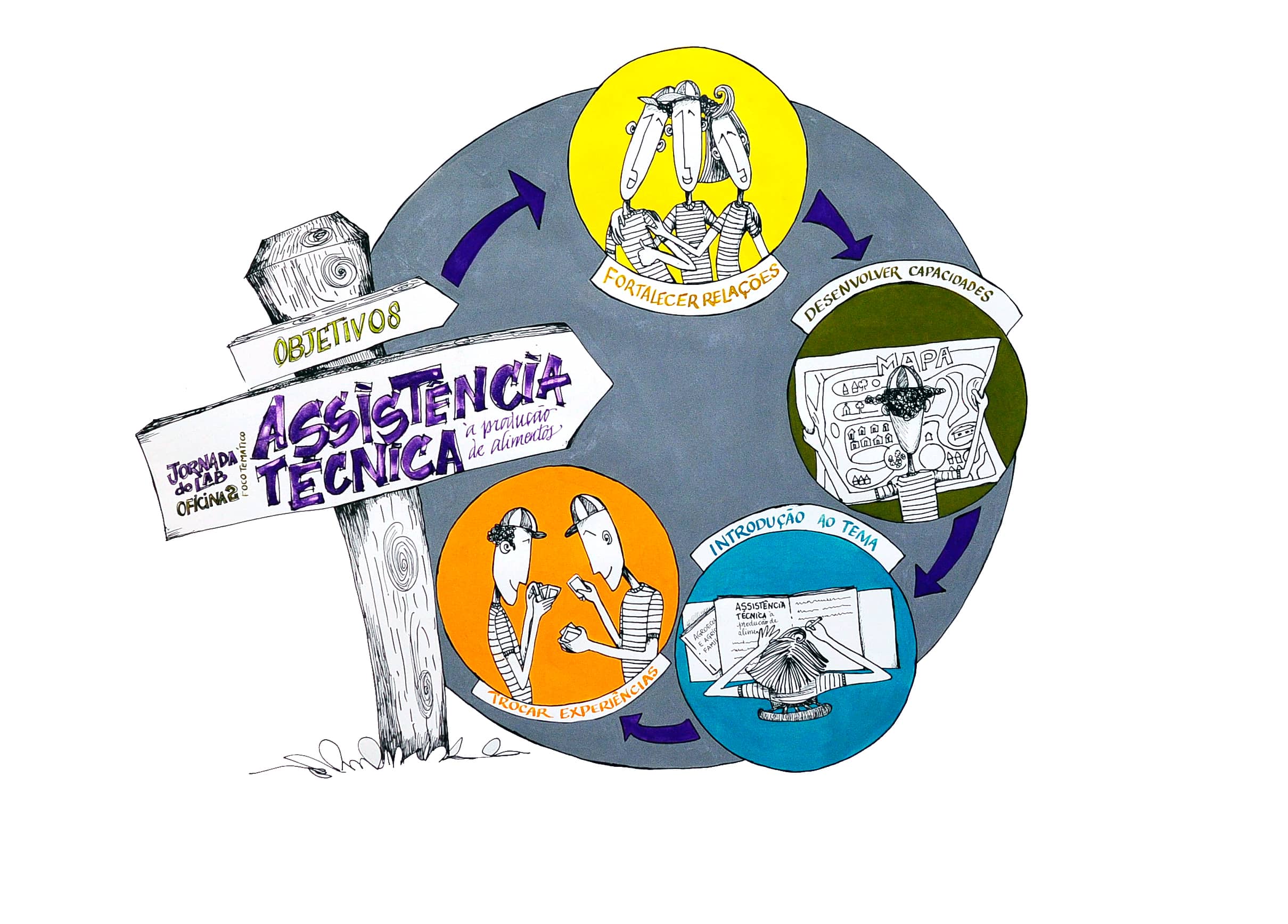
In our second workshop we worked on the concept of systemic mapping and discussed how municipal governments can help strengthen diversified local food production through technical assistance programs, training in good practices and support for the agroecological transition, taking into account experiences in family farming and livestock, artisanal fishing, and agriculture by traditional communities.
To bring an Inspiration Pill we invited Ana Cláudia Torres, member of the Research Group on Territorialities and Socio-environmental Governance in the Amazon and Coordinator of the Management and Fisheries Program at Instituto Mamirauá, to talk about the experience with managed pirarucu and how it has impacted the community and the territory.
The Call to debate was given by geographer Arpad Spalding, project coordinator at Instituto Kairós and member of the executive group of the São Paulo State agroecological transition protocol.
Watch the video below for an edited version of this workshop, with the main moments from the plenary.
Materials
Agroecological Transition Protocol – São Paulo State Government
Workshop 2 Presentation: Systemic Understanding and Mapping
Graphic Facilitation Workshop 2 – Mural da Artes
Tasks
Workshop 2 Evaluation Form
We ask the representatives who took part in this workshop to fill out our evaluation form.
