
This Tuesday, the 22nd, the Food and Agriculture Organization of the United Nations (FAO) launched the publication “Transforming Food and Agriculture through a Systems Approach”, a report that explains and illustrates the concept and importance of adopting a systems approach to food systems. The document cites and recognizes LUPPA – Laboratório Urbano de Políticas Públicas Alimentares (Urban Food Policy Lab) – as one of the benchmark experiences in urban food policy with an integrated approach.
Based on practical experiences from various countries and territories, the report reinforces the importance of integrated and intersectoral approaches to address the complex challenges that cut across food systems, such as food insecurity, environmental degradation and social inequality.
The document, which serves as input for policymakers and professionals committed to the topic, also presents the six core elements that, according to the publication, form the concrete framework for integrated action:
- Apply systems thinking;
- Build systems knowledge;
- Enable systems governance;
- Integrate actions through systems practice;
- Ensure systems investment;
- Promote systems learning.
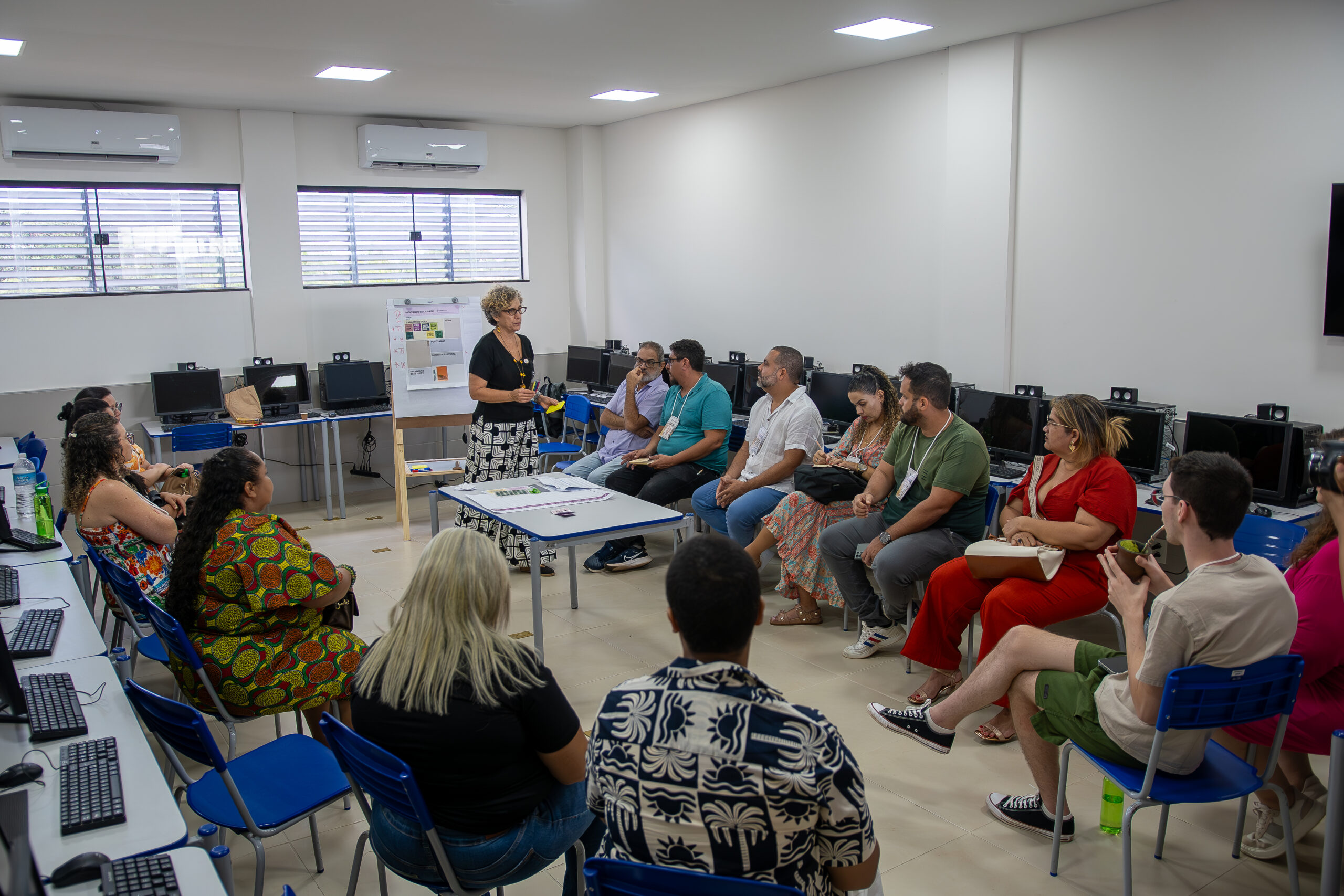
The report highlights LUPPA as a reference for the 6th element, recognizing that the program adopts co-learning as its core methodology to drive the development of integrated food policies in participating cities. Run by Instituto Comida do Amanhã in partnership with ICLEI América do Sul, the program works with a network of Brazilian cities, supporting the design and strengthening of public policies that link food, health, the environment, culture and social justice.
Juliana Tângari, director of Comida do Amanhã and coordinator of LUPPA, emphasizes that the program’s recognition in the new report gives value to food policy transformation initiatives in Latin America. “Increasingly, both FAO’s food systems division and the SOFI report itself have valued policies that adopt systems approaches, and LUPPA delivers exactly that. Our work is to accelerate and leverage the transformation of food systems from the local scale, connecting actors, territories and public policies that operate in an integrated, long-term way.”
As part of the publication’s launch, FAO is also holding two online events, on September 12 and 15, at 6 a.m. and 10 a.m., respectively, to present and discuss the report’s main points. The meetings will be free and open to the public upon completion of the forms:
SOFI Report
The launch of the document also anticipates a broader movement within FAO itself: on July 28, the new edition of The State of Food Security and Nutrition in the World 2025 (SOFI) will be released, an annual publication that brings together the most up-to-date global data on food and nutrition security.
In recent years, SOFI has reinforced recommendations that value public policies with a systems approach, capable of integrating multiple sectors and generating longer-lasting impacts. In this sense, initiatives such as LUPPA align directly with these guidelines and demonstrate, in practice, how urban policies can help transform food systems in a structural, coordinated and continuous way. In 2023, SOFI pointed to Brazil, through LUPPA, as an example to be followed as a “food labs” model for achieving SDG 2 – Zero Hunger and Sustainable Agriculture.