
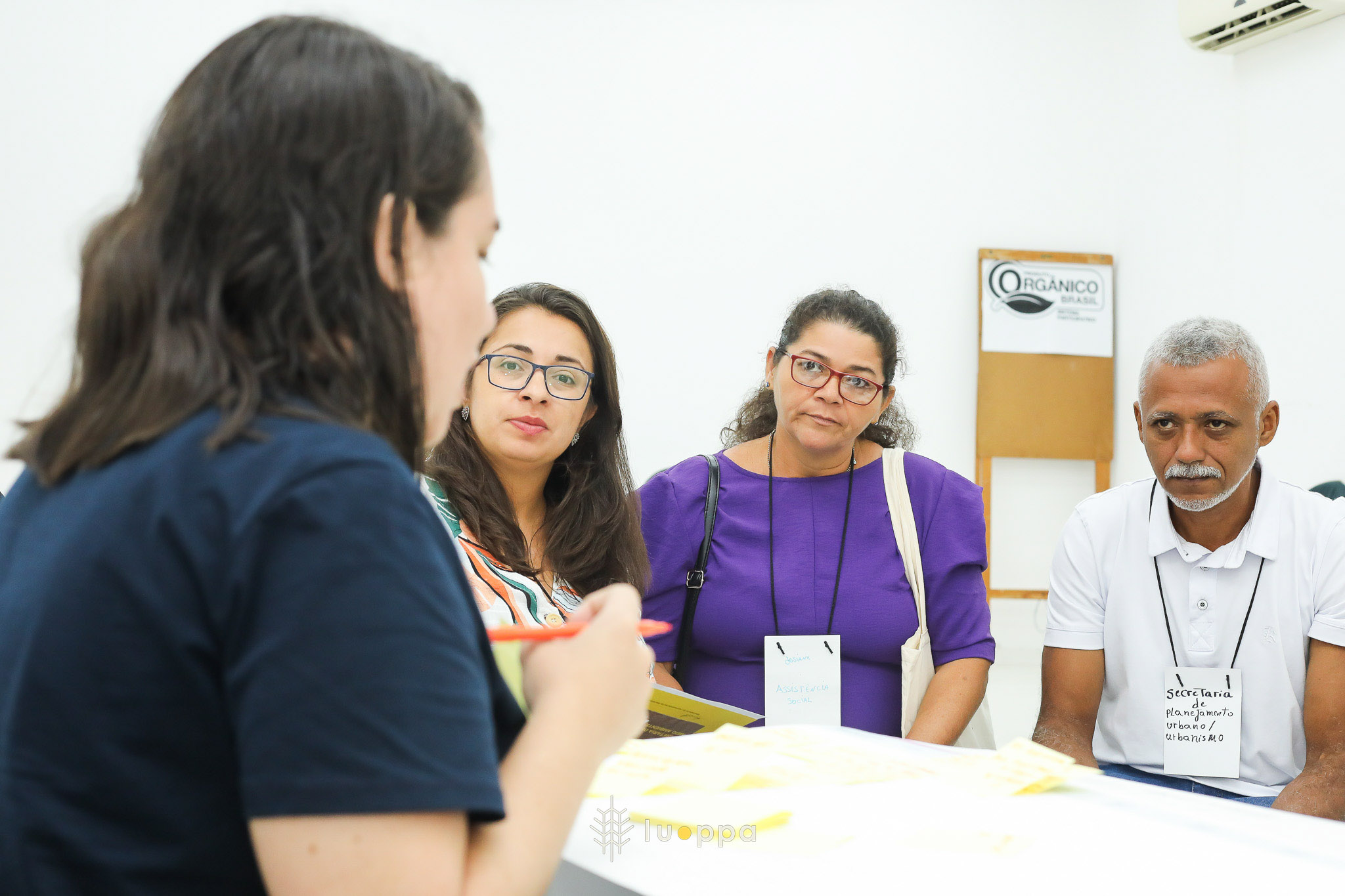
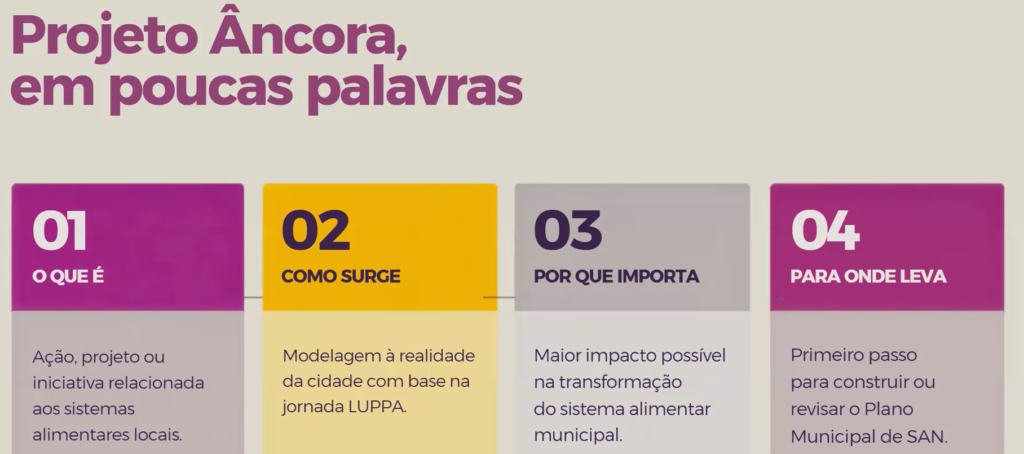
On September 15, LUPPA — Urban Laboratory of Public Food Policies held the fourth workshop of the program’s 5th edition, dedicated to developing what are known as Anchor Projects. The meeting brought together representatives of the participating cities to learn about the experiences of municipalities that have already gone through this process and to begin identifying priorities and challenges that can guide the development of their own proposals.
Held online, the workshop was led by Instituto Comida do Amanhã, co-implemented with ICLEI América do Sul, and began with a presentation of the Anchor Project concept and its relationship to the food systems agenda and municipal planning. The workshop also aimed to encourage exchange among cities and learning from concrete experiences.
During the meeting, representatives from Benevides (PA), Francisco Morato (SP), Arame (MA), and Abaetetuba (PA) shared their experiences and the paths they took in developing their Anchor Projects.
“Basically, our first Anchor Project was consolidating all of these practices. And our latest one complemented that process. In the writing stage, the process involved taking the indicators from the Department of Health, the Department of Social Assistance, and the Department of Agriculture itself, condensing those numbers and, based on them, developing actions and projects that could actually happen, bringing about change and providing food security within the municipality,” shared Kássia Ripardo, representative of the city of Benevides (PA).
From shared experience to local development
The program began with a presentation on what characterizes an Anchor Project. Next, the cities’ experiences offered a look at the different paths taken and challenges encountered in this process.
In the final stage, a plenary activity invited participants to identify which challenge each city intends to prioritize and to consider possible solutions. Among the proposed activities, municipalities were encouraged to reflect on what they would like to see change in their territories starting in 2027 and which initiatives could contribute to that transformation.
About LUPPA
LUPPA was conceived by Instituto Comida do Amanhã and is co-implemented with ICLEI América do Sul, with full support from Instituto Ibirapitanga, ITAÚSA, Infinis – Instituto Futuro é Infância Saudável, and Porticus, as well as institutional support from FAO Brazil – Food and Agriculture Organization of the United Nations.
The program brings together public officials and partner institutions with the goal of strengthening food systems governance, expanding access to healthy and sustainable food, and encouraging actions focused on local production, public procurement, and the fight against food waste and food insecurity, as well as promoting healthier food environments.