
Plano Brasil Sem Fome (Brazil Without Hunger Plan) to reduce poverty and food and nutrition insecurity
The Plano Brasil Sem Fome (Brazil Without Hunger Plan) is an initiative launched by the federal government and coordinated by the Interministerial Chamber for Food and Nutrition Security – CAISAN, which [...]
09/02/2024
|
3
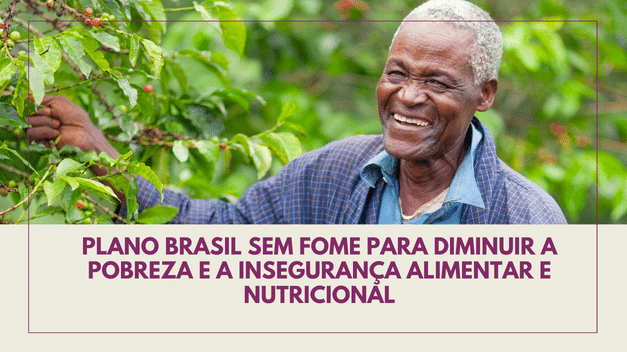
The Plano Brasil Sem Fome (Brazil Without Hunger Plan) is an initiative launched by the federal government and coordinated by the Interministerial Chamber for Food and Nutrition Security – CAISAN, which is made up of twenty-four ministries. The plan was launched on August 31, 2023 as an emergency initiative to address the serious situation of food and nutrition insecurity (INSAN) faced by 33 million Brazilians, and to mitigate Brazil’s return to the FAO Hunger Map in 2022.
What the plan consists of and how it will work
The main objectives of the plan are to reduce poverty over the coming years, take Brazil off the Hunger Map by 2030 and reduce INSAN rates, especially the most severe ones. The main strategies adopted to achieve these objectives are increasing the income available to buy food, inclusion in social protection policies, expanding the production of and access to healthy and sustainable food, and mobilizing governments, public authorities and civil society to integrate efforts and initiatives to fight hunger.
To this end, since the plan’s launch, a major national mobilization has been under way to bring together civil society, through the national CONSEA, and national, state and municipal public authorities, so that its implementation is successful. On the part of the federal executive branch, the federal government ministries that make up CAISAN launched 80 actions and programs in a joint operation to achieve more than 100 targets set by the plan. The targets are divided into three axes: “Access to income, poverty reduction and promotion of citizenship”; “Adequate and healthy food, from production to consumption” and “Mobilization to fight hunger”. Each of these axes will be broken down into strategic programs, taking into account the complexity and diversity of the hunger scenario across the national territory. The groups most vulnerable and exposed to INSAN will be the priority public in the implementation of the plan: women heads of household with children up to 10 years old, the vast majority of whom are Black women; family farmers and agrarian reform settlers, people experiencing homelessness and water insecurity; informal workers, Indigenous peoples and traditional communities, among others.
In the “Access to income, poverty reduction and promotion of citizenship” axis, the federal government has already started important measures, such as raising the minimum wage and the Novo Bolsa Família, which increased the minimum per capita amount to R$ 142.00, with an extra payment of R$ 50.00 for pregnant women and R$ 150.00 for children up to six years old. This measure lifted around 18 million families out of poverty as early as June. Also in relation to this axis, there was investment in improving the Cadastro Único (Single Registry) and in Active Search, which resulted in the inclusion of 1.6 million people eligible to access the Bolsa Família program. Also planned are the implementation of guidelines for a Brasil Sem Fome protocol, productive inclusion and professional training, and the implementation of the National Food Program within SUAS (Unified Social Assistance System).
As for the “Adequate and healthy food, from production to consumption” axis, the Food Acquisition Program – PAA and the National School Feeding Program – PNAE have already been resumed, with purchases of food from family farming to be delivered to FNS (food and nutrition security) facilities, notably the solidarity kitchens, which are the novelty compared to previous experiences. The Plano Safra for family farming and the National Supply Policy with Combating Waste have also been launched. Garantia Safra is part of the Brasil Sem Fome actions and has already been mitigating the effects of drought or environmental disasters. In addition, this axis includes rural development support, the building of food stocks, the Agroecology Policy and Food Security in cities.
The third axis, “Mobilization to fight hunger”, plans to hold Caravans for a Brazil Without Hunger in all states and several municipalities to gather more accurate diagnoses through IBGE. It also prioritizes Strengthening SISAN, encouraging States, Municipalities and entities of federative bodies to join, and the creation of a Network of Civil Society Initiatives.
Participation and governance in the Plano Brasil Sem Fome
Implementation of the plan has been under way since its launch, with the announcement and signing of measures by the federal government. A steering committee formed from CAISAN was created, which will be responsible for executing, monitoring, following up on and evaluating the progress of the Plan, and which will also be monitored by the Food and Nutrition Security Council – CONSEA. Since its launch, several state and municipal governments and entities have been signing the protocols of adherence to the plan, committing to its principles and programs. This adherence can be carried out through CAISAN and CONSEA, in coordination with state governments.
To achieve greater adherence by all federative entities and to advance in the more accurate diagnoses needed to implement the plan, as already mentioned in the third axis, “Mobilization to fight hunger”, the Brasil Sem Fome Caravans will travel throughout the country, prioritizing the municipalities in the most severe INSAN situation. The caravans also aim to raise awareness of this initiative among the population. The data to design the diagnoses and define priorities will be collected through the Annual Hunger Monitoring using the Brazilian Food and Nutrition Insecurity Scale – EBIA and the National Household Sample Survey – PNAD, through the INSAN map by municipality using the Cadastro Único, and also through the Map of FNS Facilities (MAPASAN), through regular surveys applying the Brazilian Food and Nutrition Insecurity Scale – EBIA and MUNIC in partnership with IBGE.
The Plano Brasil Sem Fome was conceived as a major national effort, shared between representatives of civil society organized around actions to fight hunger, together with public authorities, to achieve significant results in the short and medium term. Leaving hunger in the past and restoring dignity by guaranteeing the human right to food is the main foundation of this plan.