
In LUPPA’s seventh workshop, we continued our methodological journey and the development of the mapping of municipal food systems and their levers of transformation, by developing a roadmap for improving municipal food systems – choosing and planning an action with systemic impact – through which the design of the project or initiative with the greatest impact on transforming each city’s food system will be reviewed and advanced. Through this planning, we also invited cities to set an achievable goal within the first edition of LUPPA (by September 2022).
Our thematic session for sharing experiences was on Structural Policies to Fight Food Insecurity in municipalities, an urgent and necessary topic given the rising escalation of food insecurity across the country, especially since the start of the Covid-19 pandemic. We discussed how municipal governments should prioritize not only emergency or short-term measures, but also formulate structural actions that ensure the city’s resilience during periods of more severe economic hardship, as well as guarantee the population continuous and growing access to healthy and sustainable food.
Those who work in social assistance know that when “everything is worse,” that is when there is the most work “on the front line.” How, then, can municipal officials design and anchor their programs and actions so that, even in the most challenging times, the universal right to adequate food and nutrition is fully guaranteed? What does innovation mean in policies to fight food insecurity?
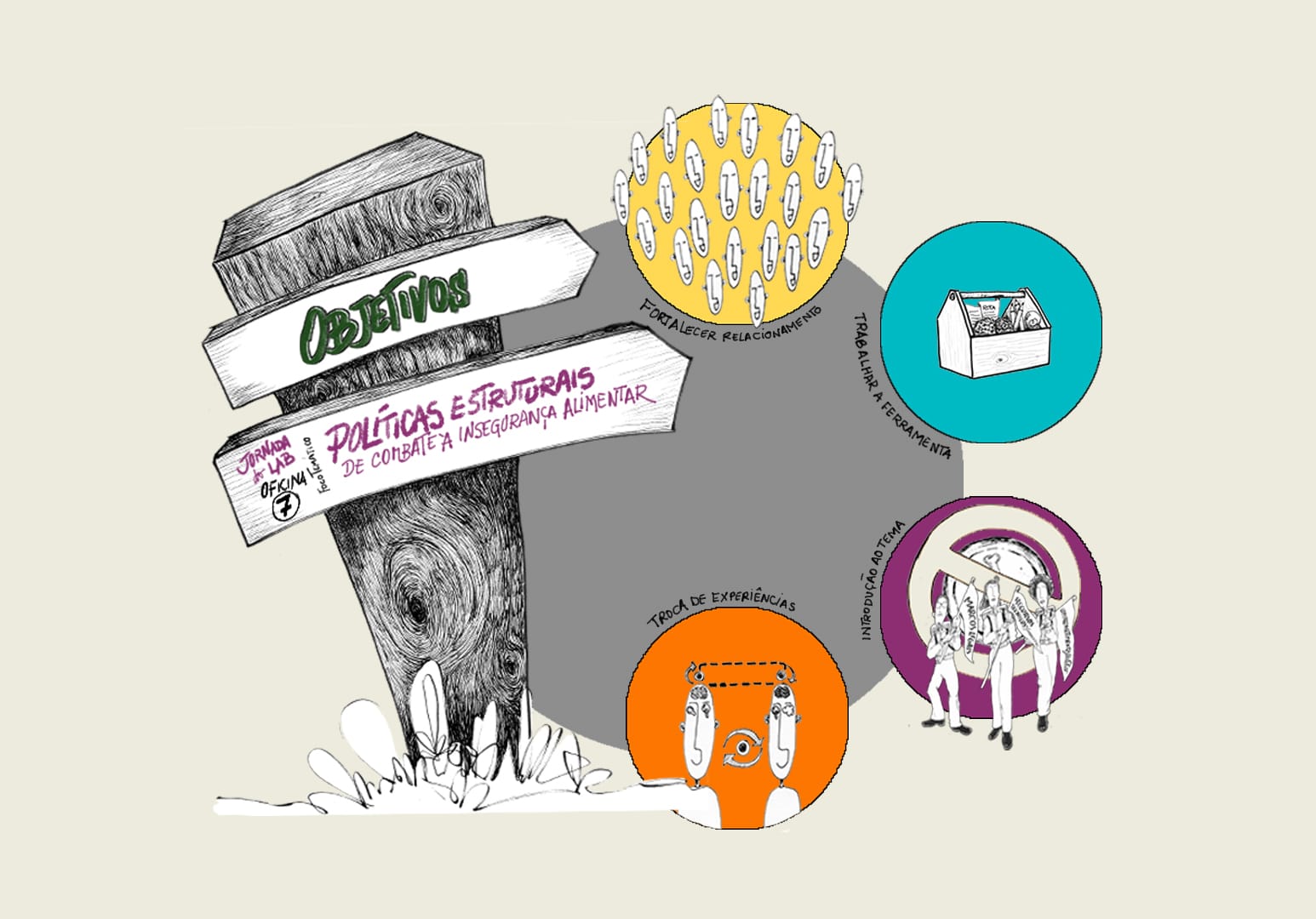
Our objectives for this workshop are:
- Strengthen relationships among participants in the LUPPA journey and their capacity for collaboration
- Work with the tool to support drawing up a roadmap for transforming municipal food systems, with the definition of an achievable goal in the first edition of LUPPA
- Introduce the workshop’s proposed theme: structural policies to fight food insecurity
- Learn about experiences with policies to fight food insecurity and promote exchanges among participating cities
The Call to Debate will be given by professor and former minister Tereza Campello, an economist with a PhD in Public Health, full professor of the Josué de Castro Chair of Healthy and Sustainable Food Systems at the USP School of Public Health, researcher at the Center for Epidemiological Research in Nutrition and Health – NUPENS / USP, and professor in the Graduate Program in Public Health Policies at the Fiocruz School of Government. She was Minister of Social Development and Fight Against Hunger from 2011 to 2016, coordinating the Brasil Sem Miséria (Brazil Without Extreme Poverty) Plan, which lifted 22 million people out of extreme poverty. She also coordinated the Bolsa Família Program, the National Social Assistance Policy, the National Food and Nutrition Security Policy, and the Cisterns Program, which delivered 1.2 million cisterns in the Brazilian semi-arid region.
Watch the video below for an edited version of this workshop, with the key moments from the plenary session.
Materials
Olhe para a fome (Look at Hunger) Survey
Video of the Symposium on Public Policies to Fight Hunger – USP
Book: Fome Zero – Uma história brasileira
LUPPA WEB 3 – Access to healthy food and vulnerable urban territories
Graphic Facilitation Workshop 7 – Mural da Artes
Tasks
Workshop 7 Evaluation Form
We ask that the representatives who took part in this workshop fill out our evaluation form.
