
LUPPA holds the second seminar of its 5th edition on food systems and extreme weather events
On Wednesday (the 25th), the Laboratório Urbano de Políticas Públicas Alimentares (LUPPA – Urban Laboratory of Public Food Policies) held the second seminar of the program's 5th edition. Organized by ICLEI [...]
31/07/2026
|
5
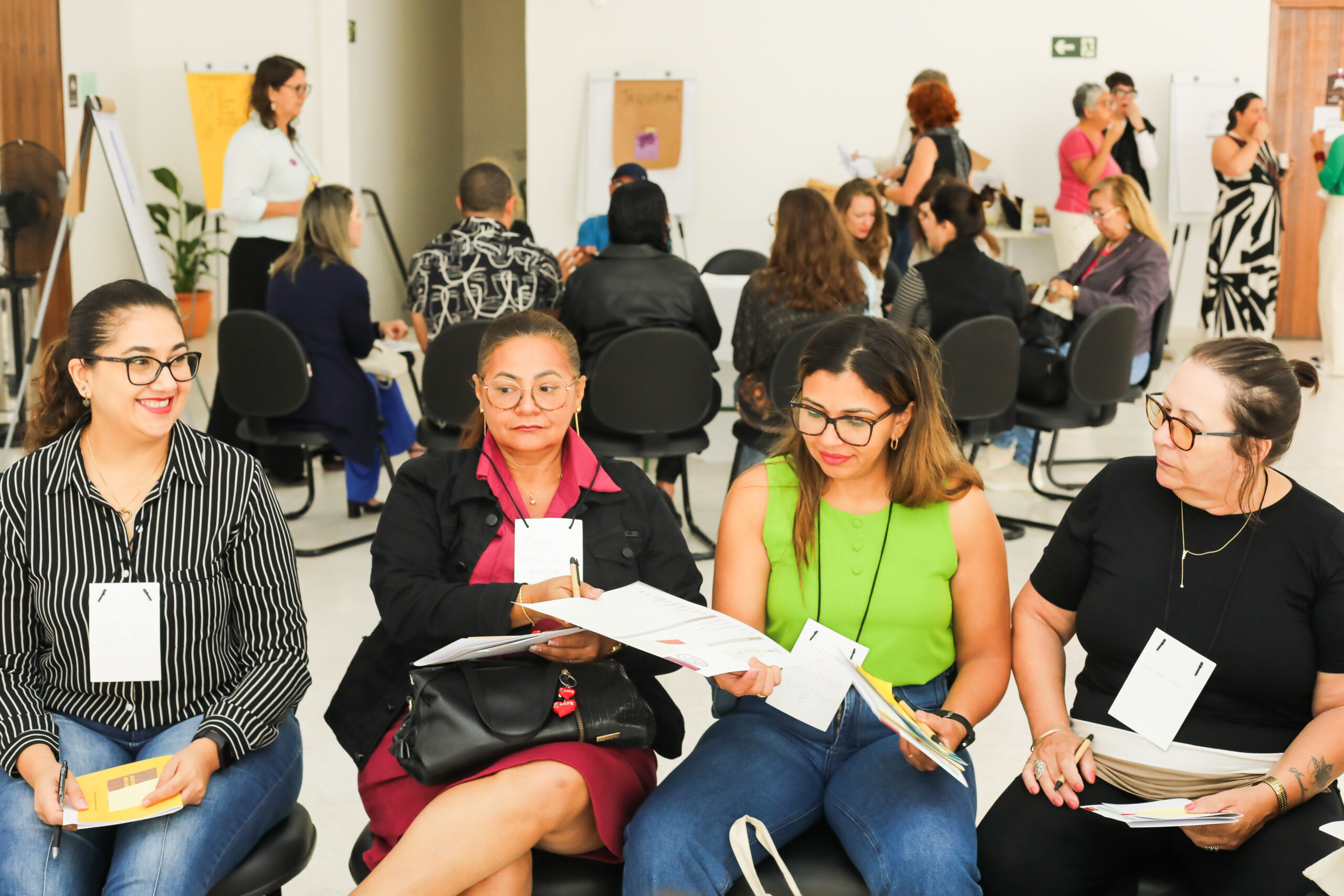
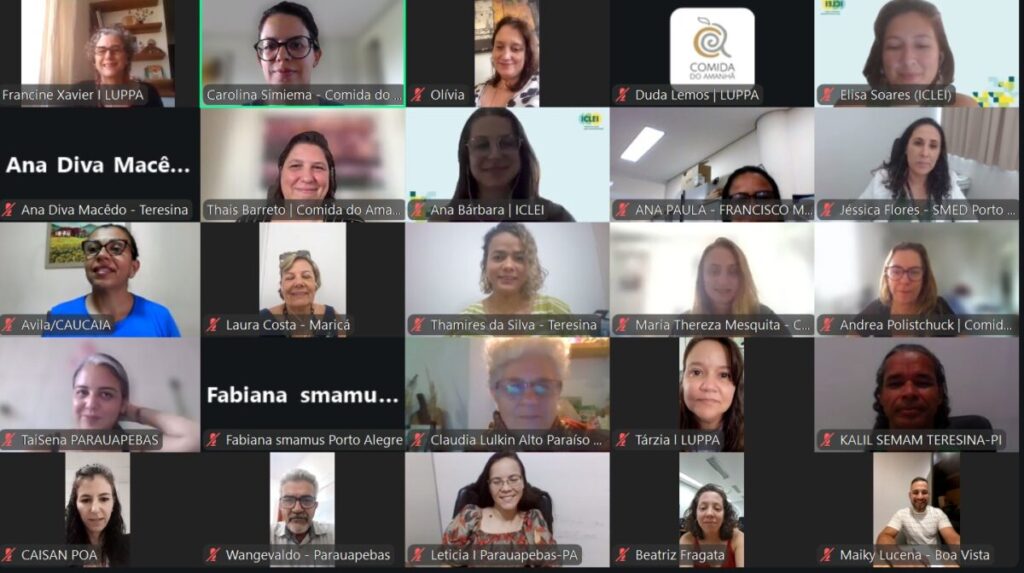
On Wednesday (the 25th), the Laboratório Urbano de Políticas Públicas Alimentares (LUPPA – Urban Laboratory of Public Food Policies) held the second seminar of the program’s 5th edition. Organized by ICLEI and held online, the meeting was part of the 2026 training program and brought together municipal officials from the network to discuss the role of local food systems policies in prevention, response and recovery in the face of extreme weather events.
Under the theme “The role of local food systems policies in prevention, response and recovery in the face of extreme weather events,” the seminar started from the observation that events such as floods, droughts and heat waves have directly affected territories’ capacity to guarantee regular and adequate access to food. In this context, the food dimension is still poorly incorporated into climate risk planning and management instruments at the municipal level.
The program began with a presentation by ICLEI, entitled “Food systems and climate risk management: the role of local policies in prevention, response and recovery based on the Urban Resilience Scorecard.” On that occasion, tools developed by UNDRR were presented, such as the Urban Resilience Scorecard, aimed at diagnosing and strengthening resilience in cities, and the Food Systems Scorecard, a thematic instrument that seeks to integrate food systems into risk management and urban planning. The presentation highlighted the importance of incorporating food systems into climate adaptation and risk reduction strategies, from an integrated perspective of sustainable urban development, in line with ICLEI’s work with local governments.
The seminar also featured presentations of municipal experiences. Porto Alegre (RS) shared lessons learned from the integrated work of different areas of public administration in the context of extreme weather events, highlighting the importance of institutional coordination. Teresina (PI), in turn, presented initiatives to tackle extreme heat and drought periods, with a focus on food security and supply.
Throughout 2026, LUPPA will continue to hold seminars and workshops for the participating cities, delving into strategic themes for strengthening public food policies at the local level.
Stages
Throughout each edition, LUPPA is structured in different complementary stages: a training program, made up of ten online seminars and workshops held throughout the year, which delve into strategic themes for strengthening public food policies in the participating cities; LUPPA Lab, the in-person stage of immersion and exchange between municipalities; and LUPPA Web, an online event streamed live on Instituto Comida do Amanhã’s YouTube channel, which marks the close of the edition and presents the initiative’s next steps. This structure seeks to broaden understanding of food systems and strengthen institutional capacities to transform food in cities.
About the Program
LUPPA is a collaborative platform and an ongoing learning program to support and enable cities to promote food policies with a systemic approach, in an intersectoral, coherent and participatory way. Conceived by Instituto Comida do Amanhã and co-implemented with ICLEI Brasil, it receives full support from Instituto Ibirapitanga, ICS – Instituto Clima e Sociedade, ITAÚSA, Instituto Infinis and Porticus, as well as institutional support from FAO Brasil – the Food and Agriculture Organization of the United Nations, and methodological partnership from Reos Partners Brasil.