
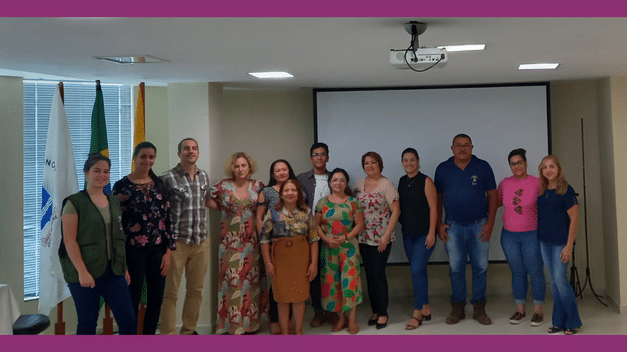
Last Thursday (9/1), another step was taken to consolidate the advisory support that the Laboratório Urbano de Políticas Públicas Alimentares (LUPPA – Urban Laboratory of Public Food Policies) provides to Rio Branco. The City of Rio Branco continues to prepare for the creation of its Municipal Food and Nutrition Security Plan.
At the meeting, the Intersecretarial Chamber for Food and Nutrition Security (CAISAN) shared the results of Tuesday’s meeting (8/30) with the Municipal Council for Food and Nutrition Security (CONSEA) and discussed the challenges and possible paths to solutions.
A story in the making
At the end of August, the city’s Caisan and its technical committee were reactivated to address the region’s food-related demands. Likewise, Consea had its role reconfigured.
Since then, several technical workshops have been held to address the impact and importance of creating the plan in the municipality.
On 8/25, the Caisan Technical Committee met to study the Food and Nutrition Security (FNS) policy and define which municipal departments would be responsible for each of the policy’s areas, so that they could prepare to present their strengths and challenges.
Check out the work areas:
- Food production and outflow
- Food supply and distribution
- Income transfer to the vulnerable population
- Free food distribution
- Drinking water supply
- Health, food and nutrition
- Conservation, management and environmental sustainability
- Strengthening the solidarity economy in food production and distribution
- Education for food and nutrition security and the human right to adequate food
- Promotion of research and studies in the area of food and nutrition security;
Then, on Tuesday, 8/30, the CAISAN departments presented to one another what they are doing and what they are planning in relation to the areas of the FNS Policy that had been assigned at the previous meeting, pointing out bottlenecks, indicators, demands and challenges, and seeking solutions together.
Now, these teams are preparing to present the same data to civil society. Newly established, they will discuss the municipality’s vision with stakeholders, and these two groups will continue the dialogue in order to, further down the road, schedule a conference.
This maturing process is what will allow the main issues to be included in the plan to be presented, a plan that from now on will be built by the city itself.
Director of Instituto Comida do Amanhã, LUPPA coordinator and one of those responsible for the advisory work, Francine Xavier highlights the importance of the project as an opportunity for the city to keep moving forward on its own, now that the advisory support has come to an end.
“In addition, we visited the popular restaurant reopened on July 19 and run with funding from the city government, which serves 500 people registered in the Cad Único (Federal Government’s Unified Registry for Social Programs) per day, is preparing to expand to 1,000 meals, and is planning 2 more restaurants,” she said.