
LUPPA brings together Brazilian cities’ proposals on food systems and climate for COP30
The position, developed by 38 municipalities during LUPPA LAB, highlights healthy and sustainable food systems as a response to the climate crisis Representatives of 38 Brazilian cities gathered from May 19 [...]
29/05/2025
|
23
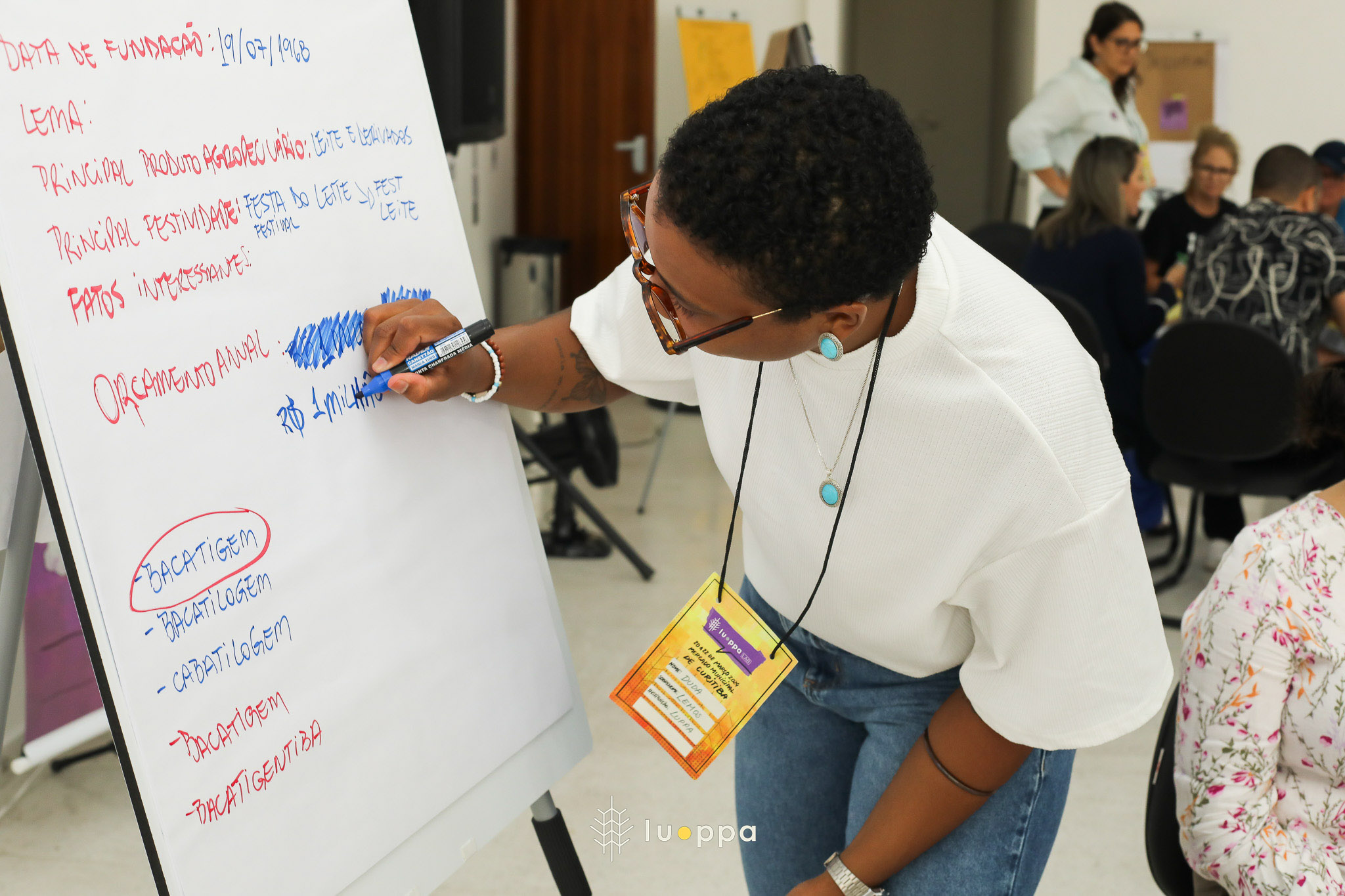
The position, developed by 38 municipalities during LUPPA LAB, highlights healthy and sustainable food systems as a response to the climate crisis
Representatives of 38 Brazilian cities gathered from May 19 to 23 in Barcarena (PA) to take part in LUPPA LAB, the in-person gathering of the LUPPA program – Laboratório Urbano de Políticas Públicas Alimentares (Urban Food Public Policy Lab), considered the largest food public policy lab in the world. During the event, contributions were gathered from municipal officials and members of civil society to build a joint position for the 30th United Nations Climate Change Conference (COP30), scheduled for November in Belém (PA). The initiative reinforces the strategic role of municipalities in transforming food systems as a response to the climate crisis.
LUPPA LAB is the in-person stage of LUPPA, a program that brings together a network of cities committed to promoting intersectoral, sustainable and participatory food policies. Run by Instituto Comida do Amanhã and ICLEI – Local Governments for Sustainability, the program promotes training, exchanges and cooperation among public officials to strengthen the urban food agenda in Brazil.
During the five days of LUPPA LAB, municipal representatives took part in workshops, activities and thematic panels covering topics ranging from intersectoral governance of food policies to funding challenges, public procurement from family farming, valuing the food culture of Indigenous and quilombola peoples, and the use of social currencies as a tool to combat food insecurity. Holding the event in the same region where COP30 will take place gives the representatives’ position even greater political and symbolic relevance, especially in light of the global challenges related to climate change and building sustainable food systems.
“This year, we decided to do this work directly with the cities present here, experiencing the territory firsthand, feeling the forest’s pulse and the whole atmosphere surrounding this moment. Our expectation is that food systems will gain more and more space in climate discussions, especially in Brazil. It is not possible to talk about climate without considering food. We need healthier, more sustainable, fairer and socio-biodiverse food systems. Our very existence depends on biodiversity,” highlights the director of Instituto Comida do Amanhã, Francine Xavier. Since COP28, LUPPA has been developing joint positions on food systems.
This year’s LUPPA position will also be included in a chapter of ICLEI’s Mayors’ Letter, a global document that expresses governments’ priorities in international climate negotiations.
Municipalities as drivers of change
The position to be taken to COP30 brings together proposals based on the contributions of the cities participating in LUPPA LAB, gathered throughout the event through a structured listening process. Among the main guidelines are promoting urban and peri-urban agroecology as a strategy for climate change mitigation and adaptation; promoting food security and sovereignty, with expanded funding for climate adaptation actions; and fair financing for family farmers, making it easier for the population to access healthy and sustainable diets. Another central point is preserving standing forests, recognizing that biodiversity, culture and natural resources are fundamental elements for ensuring food security, climate justice and the well-being of local populations.
“We need to think about maintaining food systems as a mechanism for sustaining life itself. Without viable food systems, we cannot sustain the human species,” said Hugo Salomão, senior fellow at ICLEI, who represents subnational governments at the United Nations Framework Convention on Climate Change (UNFCCC). According to Hugo Salomão França, the results of LUPPA LAB should become part of a global mobilization coordinated by ICLEI, with a special focus on the Brazilian government, which holds the COP30 presidency, as well as on international bodies. The goal is to ensure that municipalities’ interests are taken into account in the global climate debate.
Global relevance
LUPPA currently comprises 60 municipalities in 18 Brazilian states, directly reaching more than 14 million inhabitants. Since 2021, 597 public officials have taken part in the program’s activities. The initiative has been recognized in international publications such as the SOFI 2023 report (FAO, UNICEF, IFAD and WFP), the From Plate to Planet document (IPES-Food) and, in 2024, as an example of an innovative network in the report of the High Level Panel of Experts on Food Security and Nutrition (HLPE-FSN).
“At LUPPA, we pursue a participatory methodology, with exchanges of experiences between cities and a platform that strengthens the building of food public policies rooted in local territories and with civil society participation. We know that many challenges recur, but each reality requires specific adaptations. At the same time, one city can inspire another — even if it does not adopt the same policy, it can take ownership of the solution found and adapt it to its own context,” concludes Francine Xavier.
About LUPPA
LUPPA is a collaborative platform and an ongoing learning program to support and enable cities to promote food policies with a systemic approach, in an intersectoral, coherent and participatory way. Conceived by Instituto Comida do Amanhã and co-organized with ICLEI Brasil, it receives full support from Instituto Ibirapitanga, ICS – Instituto Clima e Sociedade, ITAÚSA, Fundação José Luiz Egydio Setúbal and Porticus, as well as institutional support from FAO Brazil – Food and Agriculture Organization of the United Nations and methodological partnership from Reos Partners Brasil.