
4th LUPPA workshop: focus on municipal management of Food and Nutrition Security
On Tuesday, August 19, the Laboratório Urbano de Políticas Públicas Alimentares (LUPPA – Urban Food Policy Lab) held the fourth workshop of the program's 5th edition online. The meeting brought together [...]
20/08/2026
|
7
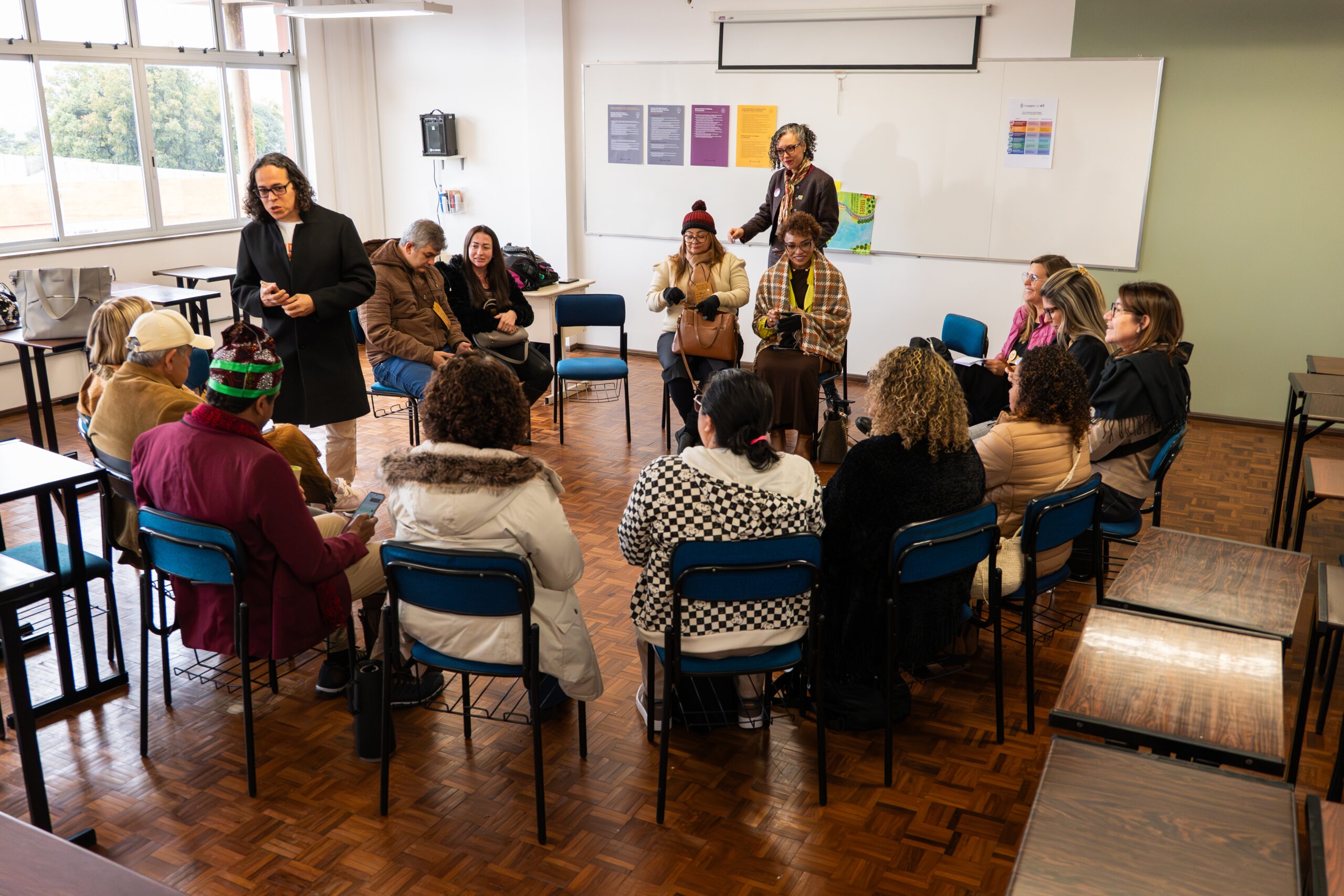
On Tuesday, August 19, the Laboratório Urbano de Políticas Públicas Alimentares (LUPPA – Urban Food Policy Lab) held the fourth workshop of the program’s 5th edition online. The meeting brought together around 50 participants from the initiative’s member cities to reflect on the practice of municipal management of Food and Nutrition Security (SAN), focusing on the responsibilities of officials and the institutional conditions needed to coordinate and implement this policy in the territories.
In addition to representatives of the municipalities in the LUPPA community, the activity was also attended by Juliana Tângari, director of Comida do Amanhã; Ana Bárbara Zanella, regional technical analyst at ICLEI América do Sul; Márcia Vírginia Bezerra Ribeiro, president of the Board of SAN Officials (Colegiado de gestores de SAN) – remotely; and members of the program’s technical team.
The activity sought to understand, based on different municipal realities, what characterizes a person as a SAN manager and to what extent municipalities recognize the need for a specific administrative structure for this agenda. The discussions also aimed to produce input for deepening the agenda of institutional strengthening of municipal SAN management within LUPPA.
Dynamics
The first activity started with an open question to participants: “In your view, what characterizes a person as a municipal SAN manager?”. The idea was to begin the reflection without setting a definition in advance, allowing participants themselves to identify the attributes and capacities associated with performing this role.
Next, the activity “Who would you accredit?” presented five fictional situations involving different profiles of public officials. Participants assessed, through polls, whether each person could be recognized as a municipal manager of the SAN policy and then defended their choices in a plenary session.
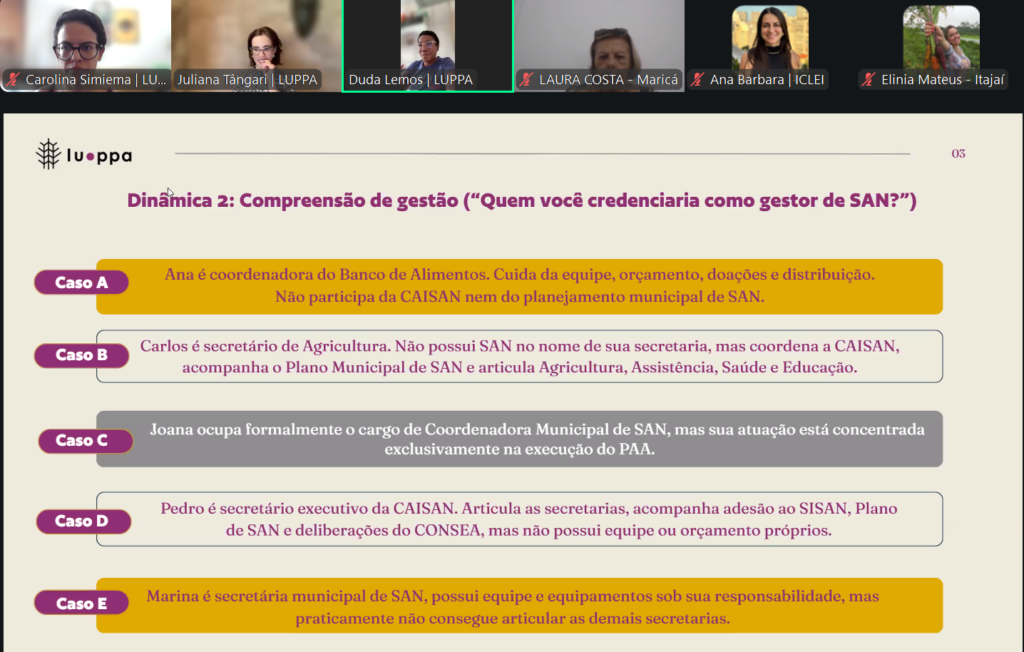
The cases brought into discussion different combinations of formal position, responsibilities, intersectoral coordination, participation in municipal planning, relationship with SISAN (the National Food and Nutrition Security System), availability of staff and budget, and coordination capacity. For most participants, the exercise was essential to show that SAN management can take on different institutional configurations. “I am grateful for today’s knowledge and learning, it was very productive and I am leaving well equipped,” said Thalya Araújo, representative of Mãe do Rio (PA).
The third stage shifted the discussion from individual action to the administrative structure of municipalities. Participants answered the question: “For the municipal SAN policy to be effectively coordinated and implemented, does there need to be a specific SAN administrative structure in the municipality?”
Based on the answers — yes, no or it depends — the plenary discussed what a specific structure can make possible, in which situations it would be necessary, and what risks exist when SAN management is diluted within a structure whose main mission relates to another sectoral policy.
Juliana Tângari, director of Instituto Comida do Amanhã, emphasized that the aim of the workshop was not to arrive at a single definition of who the municipal SAN manager is, “but precisely to open up this question and understand the perception” of those present on the topic: “The discussions showed that talking about SAN management involves much more than the name of a position or the department where this role is located. We hope to leave with better questions and more elements to think about strengthening municipal SAN management,” she said in her closing remarks.
Stages
Throughout each edition, LUPPA is structured in different complementary stages: a training program, consisting of ten online seminars and workshops held throughout the year, which explore strategic themes for strengthening public food policies in participating cities; LUPPA Lab, an in-person stage of immersion and exchange among municipalities; and LUPPA Web, an online event streamed live on Instituto Comida do Amanhã’s YouTube channel, which marks the end of the edition and presents the initiative’s next steps. This structure seeks to broaden understanding of food systems and strengthen institutional capacities to transform food in cities.
About the Program
LUPPA is a collaborative platform and an ongoing learning program to support and help cities promote food policies with a systemic approach, in an intersectoral, coherent and participatory way. Conceived by Instituto Comida do Amanhã and co-implemented with ICLEI Brasil, it has full support from Instituto Ibirapitanga, ITAÚSA, Instituto Infinis and Porticus, as well as institutional support from FAO Brazil – Food and Agriculture Organization of the United Nations and methodological partnership with Reos Partners Brasil.