
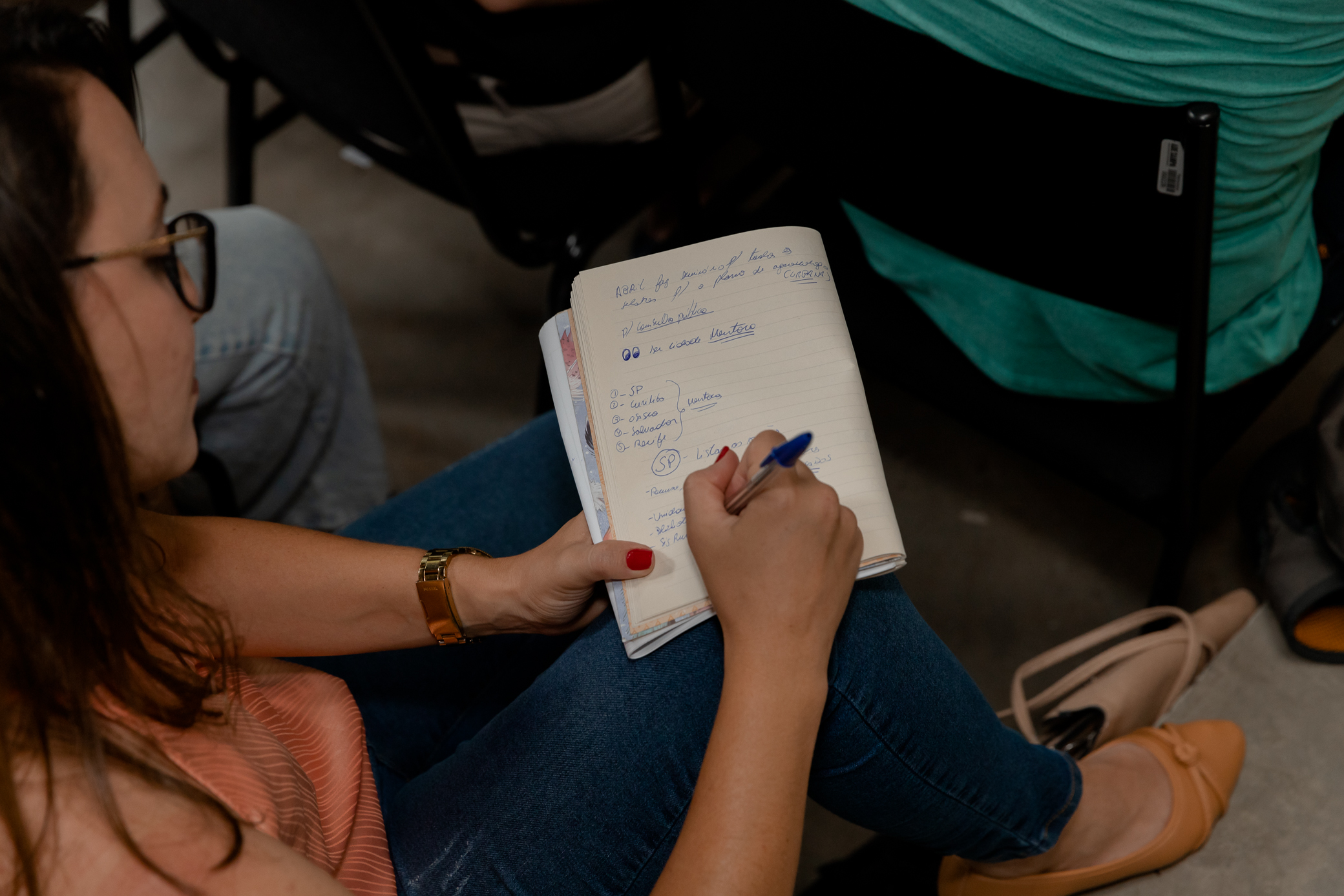
Last Wednesday (29), the Laboratório Urbano de Políticas Públicas Alimentares (LUPPA – Urban Food Policy Lab) held the fifth seminar of the program’s 5th edition. Promoted by Instituto Comida do Amanhã and co-implemented by ICLEI América do Sul, the meeting was part of the training program of LUPPA’s 5th edition, an initiative that supports local governments in building public food policies focused on sustainability, food security and urban development.
Led by Instituto Jataí, the seminar brought together municipal officials from the network to discuss municipal public procurement and the use of municipal resources in favor of sustainable local development. During the seminar, participants discussed the tools available to municipalities to direct public procurement toward territorial development, including policies such as the National School Feeding Program (PNAE), the Food Acquisition Program (PAA), the mechanisms provided for in the new Public Procurement Law, and the use of the Contrata+Brasil platform as a management support tool.
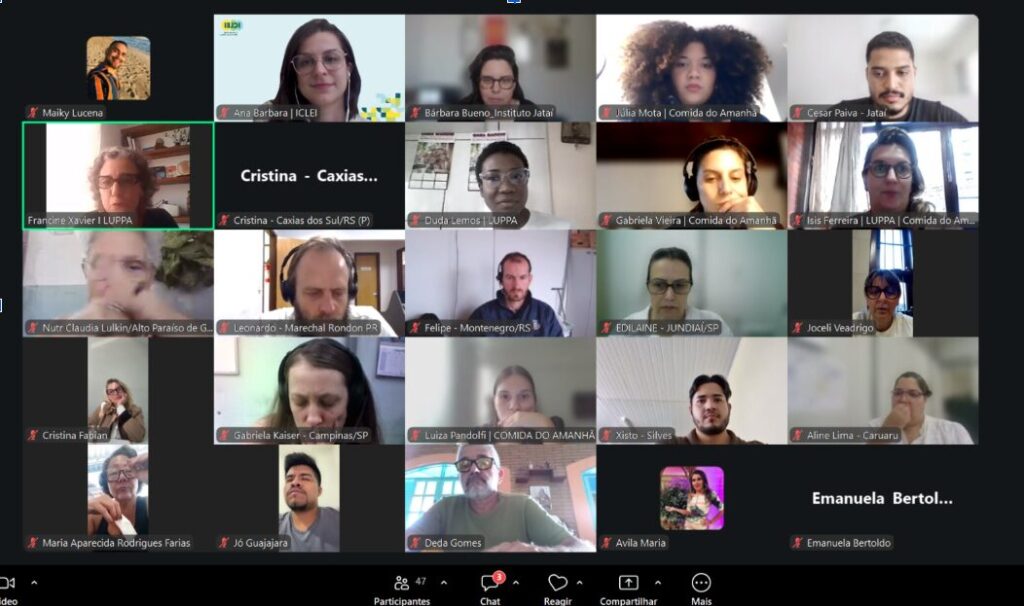
Silves (AM) and São José do Egito (PE) presented different ways of integrating these tools into municipal policies, sharing the municipalities’ experiences in planning public procurement – work that involves coordination among different departments. With a view to strengthening family farming, it became clear that such approaches can expand the participation of local producers, streamline contracting processes and promote the circulation of income within the territory itself.
The potential of public procurement to promote local development was the highlight of this fifth seminar, which reinforced that structuring it well depends on setting clear objectives and aligning procurement policies with each municipality’s priorities.
About LUPPA
The Laboratório Urbano de Políticas Públicas Alimentares (LUPPA – Urban Food Policy Lab) is an ongoing learning initiative that supports Brazilian cities in building intersectoral, coherent and participatory food policies. Conceived by Instituto Comida do Amanhã and co-implemented with ICLEI América do Sul, it is supported by Instituto Ibirapitanga, ICS – Instituto Clima e Sociedade, Itaúsa, Instituto Infinis and Porticus, with institutional support from FAO Brazil – Food and Agriculture Organization of the United Nations.