
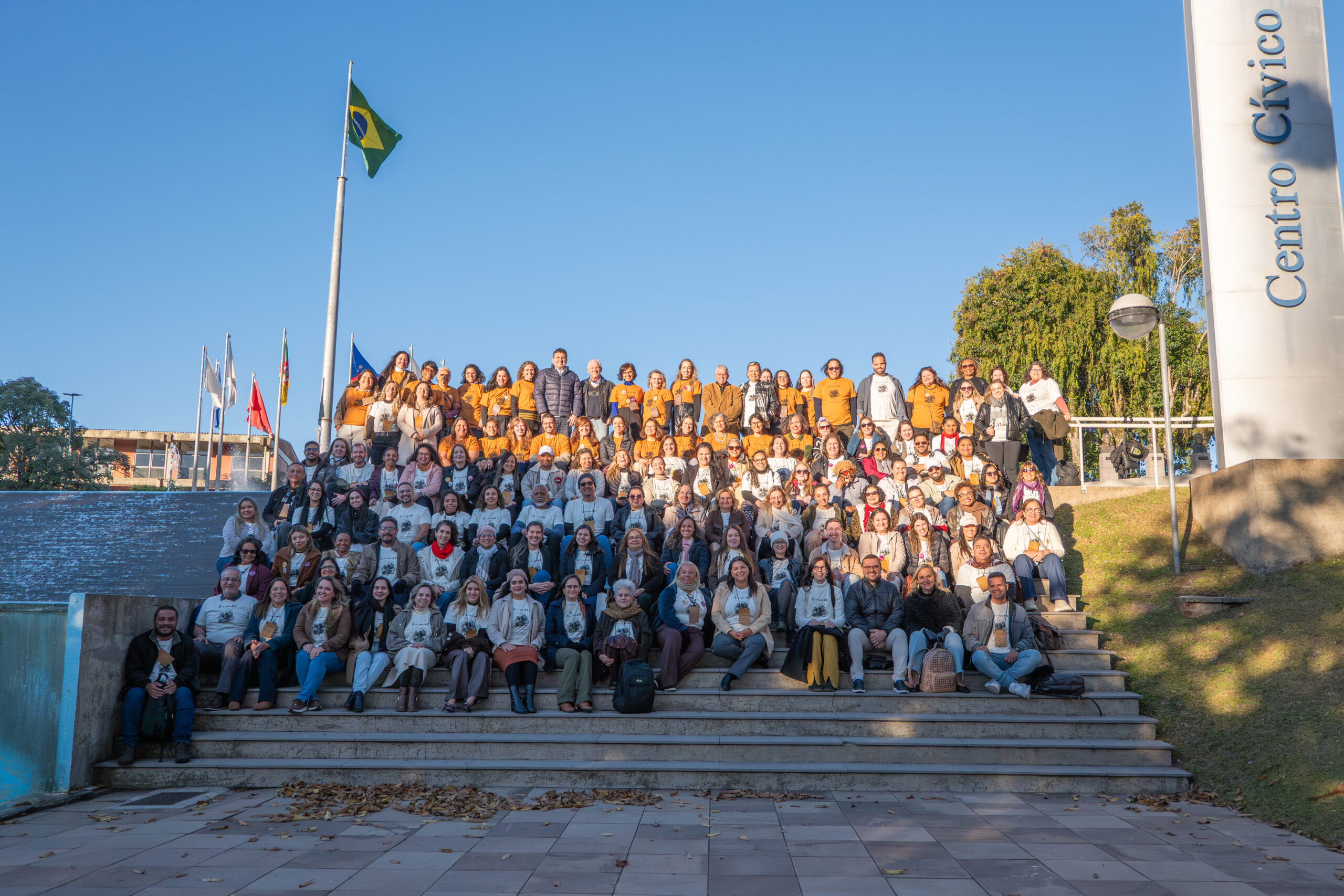
From May 18 to 22, Caxias do Sul (RS) hosted LUPPA LAB #5, an edition that celebrated five years of the in-person stage of the Laboratório Urbano de Políticas Públicas Alimentares (LUPPA – Urban Laboratory of Public Food Policies). Bringing together more than 100 participants and representatives from 46 Brazilian cities, the meeting offered a five-day immersion dedicated to strengthening public food policies in the territories.
With approximately 40 hours of activities, the LAB featured workshops, group activities, mentoring sessions and technical visits, creating spaces for exchange among public officials, civil society organizations and representatives of the participating cities.
Throughout the program, participants engaged in in-depth debates on strategic themes for transforming food systems in a systemic way, following the model proposed by the Food and Agriculture Organization of the United Nations (FAO). The discussions also addressed Food and Nutrition Security (SAN) governance, strengthening the Sistema Nacional de Segurança Alimentar e Nutricional (SISAN – National Food and Nutrition Security System), recommendations of the Committee on World Food Security (CFS) and LUPPA’s position regarding international conferences and agendas.
In addition to the training activities, the meeting also focused on the collective construction of inputs for Cadernos LUPPA #5, an annual publication that brings together the lessons learned from each edition, and for a joint position of the participating cities regarding international conferences such as the Biodiversity COP17, the Climate COP31 and the Desertification COP17. The discussions bring together themes such as the monotony of food systems, strengthening agroecology and food governance.
For Kalizia Dalla Zen, director-general of the Municipal Department of Agriculture and Livestock of Caxias do Sul, hosting the meeting was an opportunity to strengthen the Food and Nutrition Security agenda in the municipality. “What motivated us most was seeing an engaged team, eager to show all the successful experiences we have in our municipality and the strengthening of Food and Nutrition Security. As a legacy, we want to show the importance of SAN in every sphere, working above all on intersectorality. Hosting an event of this size is very rewarding for us. We welcomed people, but we are also being very warmly welcomed,” she highlights.
Five years of collective construction
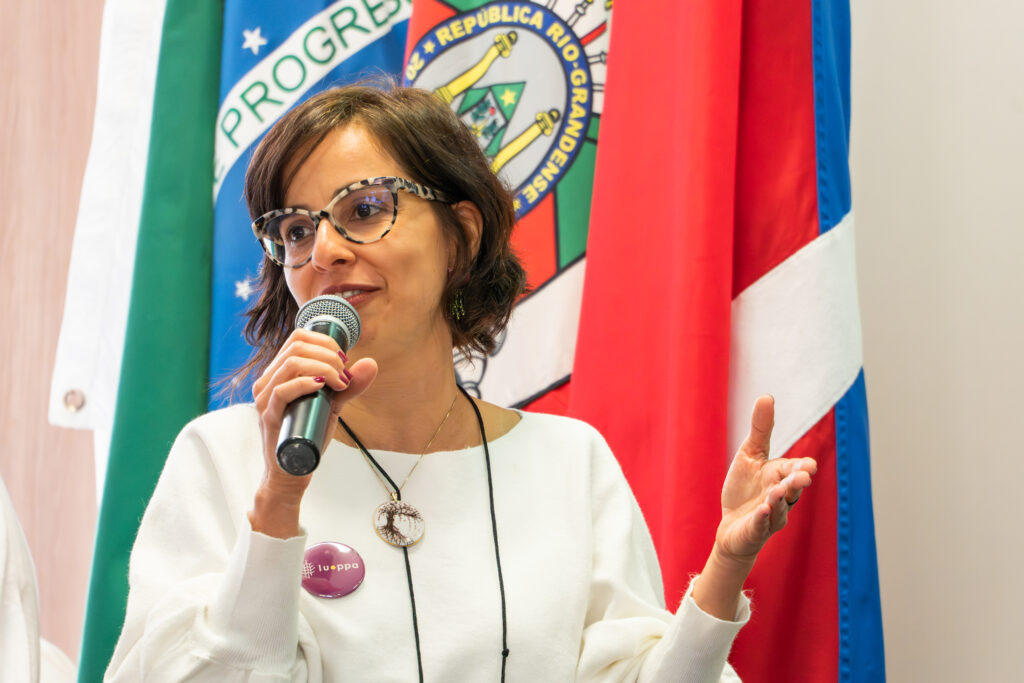
Juliana Tângari, director of Comida do Amanhã
Over five editions, LUPPA has consolidated a network of cities, public officials, organizations and council members working on the Food and Nutrition Security agenda in different territories across the country. Beyond increasing the number of participants each year, the program has also deepened its work based on the demands and challenges raised by the municipalities themselves.
According to Juliana Tângari, director of Instituto Comida do Amanhã, the maturing of the community formed around LUPPA is one of the main results built over these five years. “We have greatly strengthened this space for discussing the themes that really matter to those on the front line, in cities, in municipal administrations, delivering services and guaranteeing the human right to food. But we have also greatly strengthened this community of public servants and Food and Nutrition Security council members who have been supporting one another over time,” she says.
Juliana also highlights the program’s “strength in representation” in expanding the participating cities’ capacity for coordination and political advocacy, including with the Federal Government and international organizations. “Today we have a need for advocacy with the Federal Government, with other governments and also with UN agencies, which did not exist in the past.”
Stages
Throughout each edition, LUPPA is structured in different complementary stages: a training program, made up of ten online seminars and workshops held throughout the year, which delve into strategic themes for strengthening public food policies in the participating cities; LUPPA Lab, the in-person stage of immersion and exchange between municipalities; and LUPPA Web, an online event streamed live on Instituto Comida do Amanhã’s YouTube channel, which marks the close of the edition and presents the initiative’s next steps. This structure seeks to broaden understanding of food systems and strengthen institutional capacities to transform food in cities.
About the Program
LUPPA is a collaborative platform and an ongoing learning program to support and enable cities to promote food policies with a systemic approach, in an intersectoral, coherent and participatory way. Conceived by Instituto Comida do Amanhã and co-implemented with ICLEI Brasil, it receives full support from Instituto Ibirapitanga, ICS – Instituto Clima e Sociedade, ITAÚSA, Instituto Infinis and Porticus, as well as institutional support from FAO Brasil – the Food and Agriculture Organization of the United Nations, and methodological partnership from Reos Partners Brasil.