
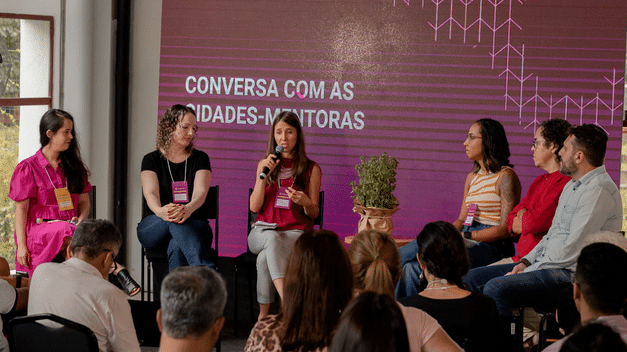
LUPPA is a lab designed to place cities at the center of the debate on the food agenda, making them protagonists and supporting them in developing their food strategies in an integrated, intersectoral and participatory way. To help us on this journey, we count on the support of Mentor Cities, cities that have already advanced in their local food policies and have solid governance structures in place. They lead mentoring journeys designed especially for technical cooperation. The Mentor Cities of the 2nd edition are: Curitiba, Osasco, Recife, Salvador and São Paulo. To define the groups of cities that will work with each of the mentors in this edition, the following factors were assessed:
- Cities that attended LUPPA LAB #2 in person
- Cities from the 1st edition that did not receive mentoring and/or awards in the previous edition
- Engagement in LUPPA activities;
- Matching the interests and challenges of the participating cities with the expertise and technical capacity of each mentor city, that is, cross-referencing what each mentor city is able to offer with what the LUPPA participating cities are interested in accessing
The cities that will receive mentoring from Curitiba are Abaetetuba, Barcarena and Belém, all in Pará. Osasco will mentor Araraquara – SP, Bragança – PA and Palmas – TO. Recife‘s group is made up of Alvarães – AM, Pindamonhangaba – SP and Vitória do Mearim – AM. Salvador will work with Maricá – RJ and Nova Lima – MG, and São Paulo with Alto Paraíso de Goiás, Jundiaí – SP and Santarém – PA. LUPPA is an intense, year-long journey that delivers an extended repertoire of possibilities so that cities become increasingly able to develop their food strategies in an integrated, participatory way, with systems thinking and aligned with global challenges and local needs and possibilities.