
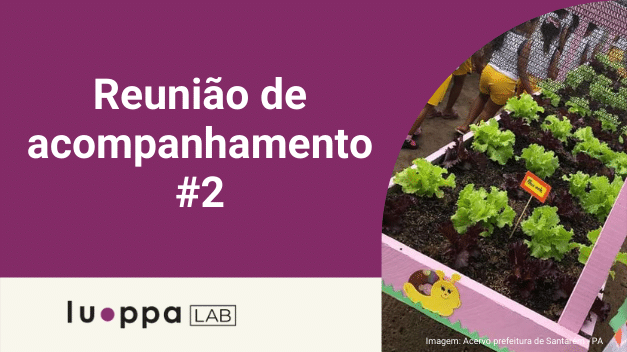
Our LUPPA journey began in September of last year. We have come a long way, but we want to keep supporting you, our participating cities, in developing strategic, multi-year food policies. Our second follow-up meeting took place on May 25, and we used this moment to discuss challenges, demands and agendas that can be taken, collectively, to the major national and international events of 2022.
These are: COP 27 in Egypt (“COP” is the name given to the international Climate Change conference held every year in November, which since 2020 has brought the centrality of food systems to the climate change agenda); the global gathering of the cities that have signed the Milan Urban Food Policy Pact, which this year will take place in the city of Rio de Janeiro in October; followed by a major conference on sustainable development to be hosted by the city of Rio, called “Rio+30”, which will include debates on food system challenges; and, of course, the state and national elections, also in October.
Our proposal is to start from the general challenges mapped in our workshops in order to discuss what state, national and international community actions are needed so that municipalities can deliver the solutions they seek for their local challenges. We will also draw on the experience of how each city’s anchor project has evolved to share these findings: common challenges and possible collective demands, of a technical and public policy nature, that can be taken to the state and federal governments.
To set the context for this theme, we had opening remarks from João Intini, Food Systems Policy Officer at FAO Americas. Intini holds a degree in Agronomic Engineering from the University of São Paulo (1997) and a Master’s in Family Farming and Sustainable Development from the Federal University of Pará. He is a PhD candidate in Education at the University of Brasília. He worked at the Ministry of Agrarian Development as technical advisor to the office of the Secretariat for Family Farming, and as deputy director and general coordinator for the promotion of technical assistance and rural extension at the Secretariat for Family Farming. He was also director of DECOM – the department supporting the procurement and marketing of family farm production, at the Secretariat for Food and Nutrition Security of the Ministry of Social Development, and director of Agricultural Policy and Information at the National Supply Company (Conab).
Watch the video below for an edited version of this meeting, with the main moments from the plenary.
