
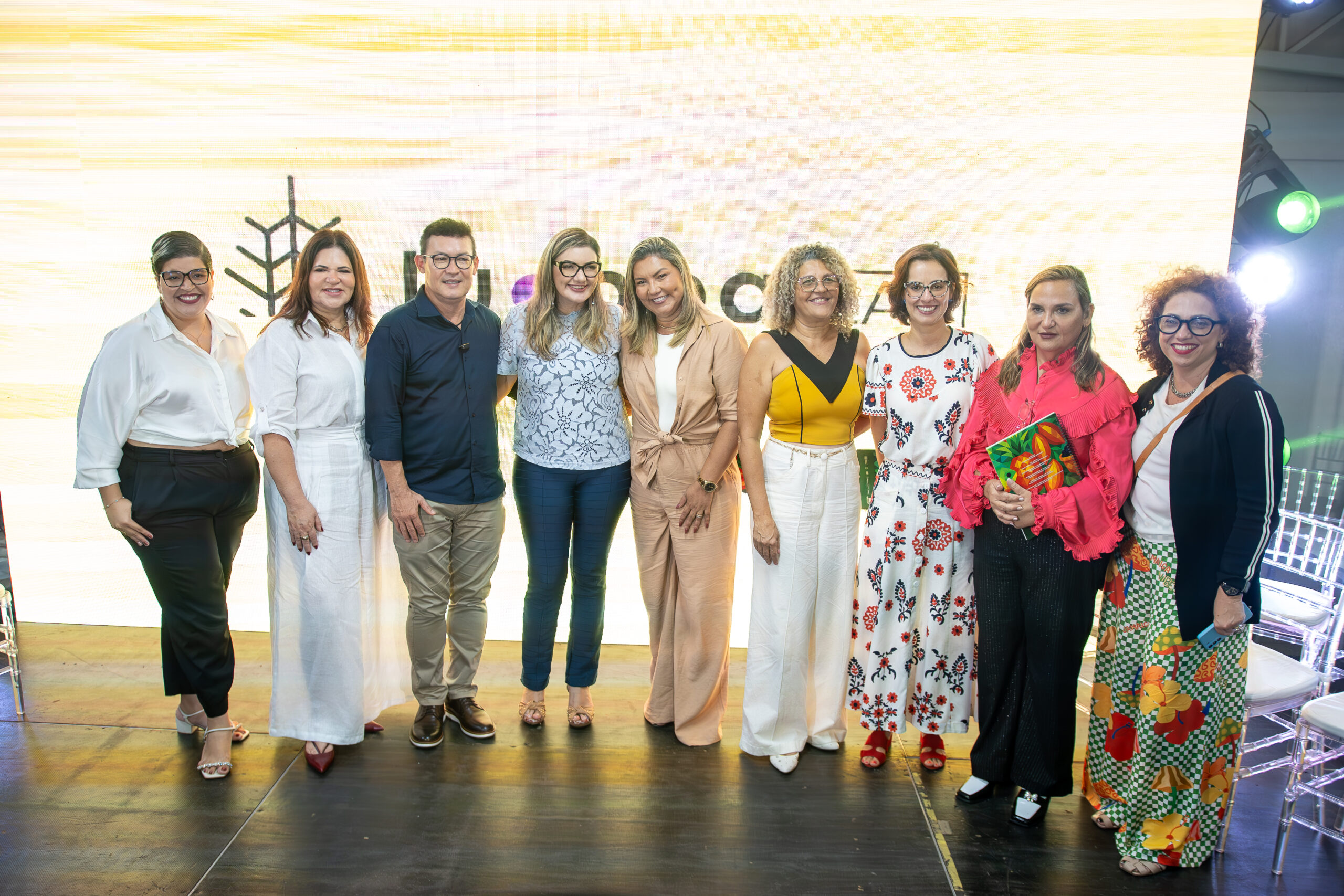
The first workshop of the fourth edition of the Urban Laboratory of Public Food Policies (LUPPA) took place on Wednesday (the 12th), online, and marked the welcoming of the program’s 11 new participating cities: Arame (MA), Benevides (PA), Blumenau (SC), Francisco Morato (SP), Itapipoca (CE), Marituba (PA), Mogi das Cruzes (SP), Porto Velho (RO), Santa Luzia (MG), Santiago (RS) and Tefé (AM) are now part of the group of 59 LUPPA participating cities. Juliana Tângari, director of Instituto Comida do Amanhã and coordinator of LUPPA, welcomed the new cities and celebrated the territorial diversity of this edition. “Our goal is to give the floor to the new cities, but this workshop belongs to all of us; it is our reunion. We have seen that these are cities with different histories, different challenges, different moments, but with many achievements in common.” During the workshop, officials from the new LUPPA cities presented the goals already achieved and the objectives under way in their local food policies. Data on this edition of the program were also shared: adding up all participating municipalities, LUPPA now covers a population of 15 million inhabitants, and 82% of the cities in the program have officially recognized traditional communities in their territories. In Arame (MA), the priority is public policies that reach the municipality’s Indigenous and peasant populations. “More than 60% of the municipality’s population lives in Indigenous or rural areas. Through LUPPA’s technical guidance, we want to implement a public policy that reaches these people. By sharing experiences [with other LUPPA cities], we draw on examples to have quality policies in the municipality,” said official Thais Guajajara. Raphaela Dias, a municipal official from Santa Luzia (MG), also spoke about the importance of the exchange of experiences among LUPPA municipalities: “I saw that many cities are already quite advanced in public policies, and we want to improve our local actions too. That is our motivation: to boost our city, which has enormous potential, to move forward with the growth and strengthening of our policies.” Since 2021, LUPPA has brought together municipal officials from all over Brazil committed to building healthy and accessible food systems. Currently, 54 cities take part in the program, which offers an annual schedule of seminars with partners and mentoring led by this edition’s mentor cities: Curitiba, Osasco, São Paulo, Belo Horizonte, Salvador and Recife. The workshop also marked the announcement of the dates for the fourth edition of LUPPA LAB, the program’s in-person gathering, which will be held from May 20 to 23 in Barcarena (PA). Edson Cardoso, Secretary of Agriculture of Barcarena, highlighted the importance of holding the LAB in an Amazonian city in the year of COP30, which will take place in Belém (PA). “Knowing that we will have a welcome as warm as the one we had in São Paulo and Curitiba [cities that hosted previous editions of the LAB] is wonderful. The LAB is an intense, immersive experience: we start by exchanging the knowledge of each place and, in the end, we are left missing each other and wanting to meet again. How wonderful that this gathering is coming to Barcarena at such a special moment for the Amazon.” About LUPPA LUPPA is a program of Instituto Comida do Amanhã, run in partnership with ICLEI Brasil. It has full support from Instituto Ibirapitanga, ICS – Instituto Clima e Sociedade, ITAÚSA, Fundação José Luiz Egydio Setúbal and Porticus, as well as institutional support from FAO Brazil – Food and Agriculture Organization of the United Nations and methodological partnership with Reos Partners Brasil.