
The cities of Curitiba (PR) and Rio Branco (AC) were the Brazilian state capitals chosen to kick off the visit program of the “Cidades e Alimentação” (Cities and Food) project, run by Embrapa Alimentos e Territórios in partnership with the European Union, whose main objective is to analyze information on governance and good practices to leverage circular urban food systems.
“The involvement of more cities in the urban food agenda is a global trend. Cities are hubs that can implement and disseminate initiatives to promote urban and peri-urban agriculture, map local farmers and connect them with consumers, encourage the operation of food banks, social supermarkets and other practices that make it possible to maximize food use and reduce waste generation,” says Gustavo Porpino, the project leader.
In Curitiba, on March 1, Gustavo met with the management team of the Municipal Department of Food and Nutrition Security, created by the local government to work as a network with other departments and partners and carry out actions ranging from support for family farming to activities aimed at consumers. “The department itself is innovative and has a highly technical and qualified team,” he says.
He also met with officials from the Department of Education to better understand how school meals are implemented, a service that is outsourced in Curitiba. Also taking part in the meeting remotely were directors Juliana Tângari and Mónica Guerra, from Instituto Comida do Amanhã, and Bruce Campos, an analyst at ICLEI – Local Governments for Sustainability.
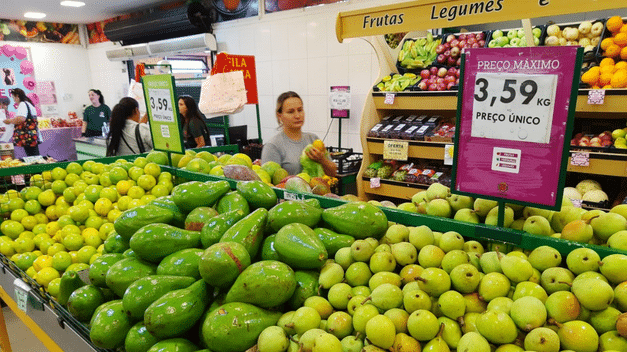
Gustavo Porpino and cameraman Elias Rodrigues also visited and filmed several local urban agriculture experiences, such as the Urban Farm and the Community Gardens, the Popular Restaurant, the Sacolões and Armazém da Família (municipal low-cost produce markets and grocery stores) and the city’s circuit of organic markets. “These are experiences that can be replicated in other cities,” says Porpino.
Of all Brazilian state capitals, Curitiba is a pioneer in actions to strengthen food and nutrition security. The city in Paraná has 145 urban gardens, with 5,700 growers involved in planting, benefiting 17,900 people. Located in the Cajuru neighborhood, the Urban Farm covers 4,435 m² of public space, and there are more than 60 Honey Gardens spread across the city. In October last year, the city of Curitiba received an award at the 8th Global Forum of the Milan Urban Food Policy Pact, in Rio de Janeiro, for standing out in innovating and promoting urban agriculture.
Visit to Acre
The second city visited by the project was Rio Branco, in Acre. On March 8, Gustavo, Elias and the project partners met with the city government and five departments working on programs aligned with the urban food system.
“We interacted with the managers of the food bank, the popular restaurant and the solid waste treatment unit. Rio Branco reinstated the municipal Caisan (Intersectoral Chamber for Food and Nutrition Security), reopened the popular restaurant in 2022 and is finalizing the municipal food and nutrition security plan,” says the Embrapa analyst.
Researcher Cleísa Brasil, from Embrapa Acre, accompanied the visit to the Hortas e Fazendinhas (Gardens and Little Farms) project, which is being launched in municipal schools. Elias Miranda, acting head of Research, Development and Innovation, took part alongside Cleísa in the technical meeting at the city government.
The data collected in the meetings and visits to the initiatives will be analyzed together with data from the other three cities the project will visit through April. The next ones will be Santarém (PA), from March 14 to 17; Recife (PE), from March 22 to 24; and Maricá (RJ), from April 11 to 14. In the second phase of the project, representatives of the Brazilian cities will see firsthand programs and policies promoting urban food systems in the European cities of Valencia, Montpellier, Ghent and Turin, during a technical mission in June this year.
Gravimetric Analysis
Analyst Gustavo Porpino explains that one of the project’s actions involves training technical staff from the cities of Rio Branco, Curitiba and Recife in gravimetric analysis of food waste from street markets, that is, quantifying and categorizing the waste of the main markets. The results will be presented at the international seminar Cidades e Alimentação (Cities and Food), scheduled to take place in September in Rio de Janeiro.
The project “Cidades e alimentação: governança e boas práticas para alavancar sistemas alimentares urbanos circulares” (Cities and Food: Governance and Good Practices to Leverage Circular Urban Food Systems) is led by Embrapa Alimentos e Territórios, an Embrapa unit headquartered in Maceió (AL), in partnership with the European Union, through the EU–Brazil Sector Dialogues, and is supported by Instituto Comida do Amanhã, ICLEI América do Sul and WWF Brasil.
Photo: Gustavo Porpino